Showing posts with label trees. Show all posts

Thursday, May 08, 2014

Notes on knots

While some may say there is no such thing as a good knot, some knots are not as bad as other knots.

Two kinds of knots may pop up in – or out of – your wood: red knots and black knots.

Red knots
Red knots are formed by branches that were living when the tree was cut down. Black knots are the remains of branches that died – perhaps a hundred or more years before the tree was felled. The black is the bark and pitch that surrounded the once-living branch and was subsequently enveloped by the tree as the trunk grew wider.

Knotty pine, the paneling so fashionable in the 1940s and ’50s, owed its design to red knots, which are well-fastened to the wood around them. Black knots, however, tend to loosen and pop out.

To most woodworkers, especially furniture-makers, all knots are bad. Because they expand and contract differently from the wood around them, and may have different densities, they can lead to uneven finishes and often weakened structures. 

Black knots can simply fall out, resulting in knot holes, which can significantly weaken the wood and, in a table top or door, provide an awkward opening.

So especially if it’s black, you would not want a wood knot.

Wednesday, May 07, 2014

The stinky tree

The Bradford pear is a “street tree” that’s blessed with benefits and cursed with shortcomings.

A cultivar of an Asian tree, the Bradford is actually a Callery Pear (Pyrus calleryana). Joseph Callery, a French missionary, “discovered” the species in China and sent it to Europe to be classified – and enjoyed. Today, it’s found along countless miles of American town and city streets. It laughs at pollutants like auto exhaust or road salt and needs barely a square foot or two of exposed earth as it rises from a cement sidewalk next to an asphalt highway.

In early spring, the Bradford produces thousands of showy, white flowers. Unfortunately, the blossoms reek – the smell has been likened to long-unwashed sweat socks. It’s a scent, nonetheless, that attracts scores of pollinating insects.

The tree has another disadvantage: It’s weak and it breaks. Sometimes, Bradfords split down the middle.

However, a rarely mentioned benefit of the Bradford pear is its tiny, marble-sized fruits. Birds love them, especially in the middle of winter when food is sparse. Even in January, it’s not unusual to see robins, cardinals, Blue Jays, even flocks of Cedar Waxwings, wandering its branches, snacking on the fruit, right in the middle of a town or city.

For that alone, we’ll deal with the spring stench and the risk of being beaned by a branch.

Wednesday, March 05, 2014

Winds of life

March is famous as the month that is supposed to roar in with leonine force, pruning some trees and felling others. But in the world of trees, the March wind is a new-life giver as well as an old-life taker.
 
As any allergy sufferer knows, trees produce enormous amounts of pollen – a single tassel of birch flowers can disperse 10 million grains. March winds can bear the pollen of red maples, American elms, ashes, willows, and other early bloomers to fertilize distant flowers, leading to seeds and, if all goes well, a new tree.

The wind is a reliable, effective vehicle for arboreal intercourse. Some years ago, the Paris Botanical Garden had a pair of female pistachio trees that bloomed for years but never fruited. Then one year, both were full of nuts. A researcher found that some miles away, on the other side of the city, someone's new, male pistachio had bloomed for the first time that year. 

While a high wind in March may spell the end for a few old trees, it can also bring life to many others.

Wednesday, May 14, 2008

Ash yellows

For folks with White Ash trees, early May can be a nail-biting time as they wait and wait for the leaves to appear.

Ashes are one of the last native trees to leaf out in the spring. Many are still not out yet.

But ash owners aware of the “ash yellows” are particularly anxious to see leaves in the hopes that this deadly disease has not struck their tree. The result could be a hulk costing many hundreds of dollars to remove.

Ash yellows is a protoplasma, a kind of parasitic bacteria possibly transmitted by beetles, that attacks ashes and can kill them as in as quickly as one year – an amazing feat, considering White Ash may be anywhere from 50 to 100 feet tall, with up to a five foot diameter trunk.

One sign of a diseased tree are “witches’ brooms,” spindly clusters of leaves amid limbs that are otherwise leafless (see picture)

No one knows for sure how it spreads or exactly how it works, and no one has a way of preventing ashes from catching it.

But by now, if your ash has avoided infection, at least leaf buds should be appearing. If not, better plan on calling a tree crew.

Save the wood, though – ash is great in the fireplace.

Wednesday, March 26, 2008

Treetop visitors

Spring’s leafless trees are a far cry from Shakespeare's bare ruined choirs of winter. Where late the sweet birds sang is springing to life with song. Those branches are the hotels and summer homes of countless migrants.

The earliest of the tree flowers are blooming. Where there are flowers, there are usually insects. And where “bugs” are, birds are sure to follow. In fact, insects drawn to the early-flowering trees are important food for warblers, tanagers and other small migrants heading north in the weeks to come. Some will stop here to nest for the summer while many others eat and run, heading farther north.

For bird watchers the leafless limbs of early spring are a blessing. The scores of colorful arrivals are much easier to spot without lots of green blocking the view.

So instead of watching spring arrive on the thermometer, dust off the binoculars and point them to the passing parade of treetop visitors.

Wednesday, January 23, 2008

Winter harvest

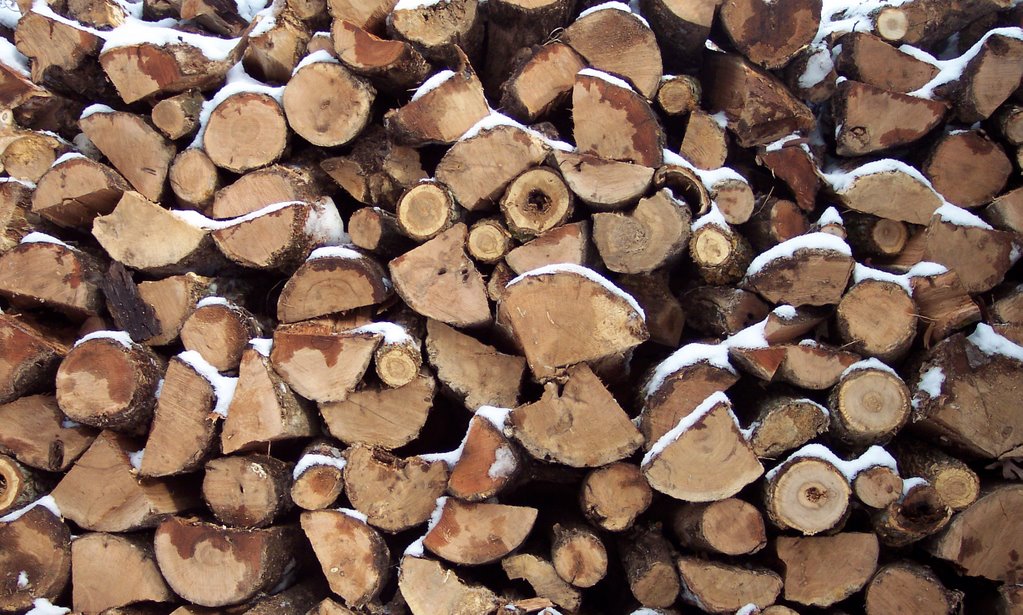
There’s an old saying that firewood keeps you warm twice: Once when you’re cutting it and once when you’re burning it. But that’s not why winter was the time for woodcutting among the old farmers who lived in town a century or three ago.

Winter was woodcutting time for more practical reasons. First and foremost, farmers had the time – there were no crops that needed tending in January and February.

In winter, it was easier to pull large loads of wood on a sledge or “stoneboat” because the winter woodlands were usually covered with snow or ice and the forest floor did not have much of the thick underbrush that made travel among the trees difficult at other times.

The wood was drier in winter, lacking the sap found in spring, summer and fall. Logs would season more quickly and be safe and ready for the following winter’s home fires.

Good farmers loved the outdoors and always needed something to do. Wood was their winter harvest.

Wednesday, November 28, 2007

Queen of the forests

When our grandparents were children, the Queen of the Eastern Forests still reigned. The spreading chestnut, under which Longfellow's village smithy stood, rose more than 125 feet with a trunk 10 feet in diameter.

The American Chestnut was one of our most valued trees. Whole houses could be built from its fine, hard wood. Its fruit was a relished food – who hasn’t heard “chestnuts roasting on an open fire” and wondered what real chestnuts must have tasted like?

But around 1904, at a Japanese exhibit in New York, an Asiatic tree fungus escaped and during the next two decades wiped out the mighty chestnut from Maine to Mississippi.

Well, almost. The chestnut blight attacks only the above-ground parts of tree. Thousands of old chestnut roots still survive in the woods, sending up young trees that may rise 20 feet before being attacked and killed by the fungus. The trees are usually too young to produce nuts from which wholly new trees can grow. Thus, these ancient roots are hanging on for dear life, seemingly hoping for a miracle.

And a miracle may be at hand. Scientists are “backcross breeding” the American Chestnut with the Chinese Chestnut, which means they keep taking hybrids of the two and adding more American Chestnut genes by repeated crossbreeding to find the most blight-resistant strains. They hope to get a nearly pure American Chestnut that can withstand the blight and repopulate the eastern forests.

While there's little hope for the village smithy, “backcrossing” may one day return the spreading chestnut to its noble size and full numbers.

Wednesday, September 26, 2007

Nut birds

The season of nuts is upon us, and squirrels are once again being admired for being so industrious. Don't they gather up and bury all those acorns and other nuts? Aren't they responsible for planting forests full of oaks, hickories and beeches?

Not necessarily. Biologist M.R. Chettleburgh has found that during the single month of October, 30 to 40 jays can gather and plant more than 20,000 acorns alone. The jays are caching them for future use, but often forget their whereabouts, allowing the nuts to sprout.

On average, jays carry these acorns a quarter mile from the tree that bore them, but often they fly them a half to three-quarters of a mile away. No lazy, old squirrel is going to haul an acorn a half-mile.

Clearly, jays are the real planters and spreaders of our woodlands. In Siberia, in fact, they are protected by the state because of their forest-expanding abilities.

And maybe that's why Blue Jays are so noisy at this time of year, screeching and squawking seemingly from dawn to dusk: They're whining about all the credit the squirrels get for being hard-working.

Wednesday, September 19, 2007

Beeches and bears

For most of us, “beech nut” means a baby food. However, if you’re old enough, you probably remember Beech-Nut Chewing Gum. And if you’re really old enough, Beech-Nut Coffee, Beech-Nut Macaroni, and – with a name in which the words seem to clash, Beech-Nut Peanut Butter.

For a bear, however, a real beech nut is like candy.

At this time of year, Black Bears will climb 60 or more feet to the top of an American Beech to search for its offering of food. The bear will break off nut-laden branches from the tree’s crown and stuff in them in the crotches of limbs while it picks off and eats the nuts. Old New Englanders called the resulting tangles of nutless, broken branches “bear nests.”

Why go through all this trouble when berries and other foods abound down below? The beech nut is said to be the calorically richest nut in North America, containing at least 50% fat and 20% protein. For a bear about to hunker down for a long winter’s nap, that’s an ideal food – well worth the climb and the work that includes breaking off branches up to two and a half inches in diameter.

Wednesday, September 05, 2007

The season for sneezin'

As millions of tons of sneeze-provoking pollen is spewed the air this season, innocent bystanders invariably get the blame.

Goldenrod is often cited as the cause of hay fever simply because it's so brilliant at a time when its humble but potent cousin, ragweed, is also blooming. As a result, misguided allergy sufferers destroy countless goldenrods, one of the great seasonal sources of color and scent as well as nectar for bees.

Airborne pollen causes hay fever. Most flowers with airborne pollen – ragweed, plantain, grasses, many trees – are green and unnoticed, hidden among their own leaves. They're green because they don't need to be “different” to catch the eye of passing bees and other flying pollinators – they use air, not insects, to effect pollination. Goldenrod has bee-borne pollen, too heavy to float in the air and up the nose. Its yellow helps attract bees to haul its pollen around.

Thus, despite all the colorful TV and magazine ads for allergy medications, few if any brightly colored flowers will ever tickle your nose or tighten your chest. Wheezers and sneezers should join everyone else and enjoy Mother Nature's late summer explosion of yellow.

Friday, August 31, 2007

Somniloquent singers?

Long after its season of nighttime wooing has passed, the Eastern Gray Treefrog occasionally erupts in daytime song, but no one seems to know just why.

These arboreal acrobats that can climb glass windows as well as trees can also deftly snag an insect in mid-air as it passes by a branch. They feed mostly at night and sleep by day.

However, in late August, their brief, bird-like trills can occasionally be heard at almost any time of the day, especially if there’s been a shower. You might hear a call from one tree, then a response from another, and depending on how froggy your neighborhood is, two or three other treefrogs nearby may join in the exchange.

In the spring, their calls are part of the expected nighttime chorus of courting critters, but by this time of year, all that love-making is long past. So why sing when they’re supposed to be asleep? Perhaps they suffer from somniloquy and are just sleep-talking as they dream of happy, youthful encounters those long months ago.

Tuesday, August 21, 2007

Acorn Rain

On an early morning walk in late August, you are bound to hear the click-clacking of the oak trees. High in their branches gray squirrels are picking and dropping acorns that fall through the leaves and twigs like so many giant raindrops.

Squirrels learned long ago that, rather than pick and carry each acorn or hickory nut to the ground to bury, it’s a lot easier to drop a bunch at a time, then climb down to collect and cache them.

But they have to be quick about it sometimes.

One day a few years ago, we came across one of the drawbacks of the squirrels’ efficient operation. Under a bountiful oak raining with acorns from a half dozen squirrels stood a herd of a five deer, eating these gifts from above as quickly as they landed.

Even in nature, no system is perfect – unless you’re a deer that likes good service.

Tuesday, July 17, 2007

Alien threats

Illegal immigrants are much in the news lately, but immigrants of a different sort are sneaking across our borders and causing havoc.

The Emerald Ash Borer, a beetle from Asia discovered here in 2002, has killed countless ash trees – more than 20 million in Michigan, Ohio and Indiana alone. It has cost towns, property owners, nurseries, and forest products industries – even baseball bat makers – tens of millions of dollars. It’s just one of a passel of insect and plant pests that have entered our country hidden in packaging or produce. Some problem plants, such as Purple Loosestrife, Japanese Knotweed and Yellow Flag Iris, were imported deliberately because of their beauty, only to become bulls in an environmental china shop.

Without natural controls, some alien plants spread wildly, pushing out native plants and in the process destroying ecologies that support many native birds, fishes, reptiles, amphibians, and insects.

What can we do? Know and destroy invasive plants. And insist that legislators support not only better surveillance of our ports of entry, but also research into combating imported pests that have already arrived.

Our leaders must understand that not all alien threats to our nation come from terrorists.

Tuesday, May 22, 2007

Frozen out

Tulip Trees bloom in May – you can see their petals being discarded to the ground below by squirrels eating parts of the sweet, green-orange flowers. These members of the magnolia family are our tallest trees, averaging 120 feet, often reaching 150 feet, and known as tall as 190 feet.

Tulip Trees were once circumboreal – found in North America, Europe and Asia. They now live only in China and eastern North America. The European Tulip Trees were wiped out, not by man but nature, in the last ice age. On our continent, as the ice moved south, the Tulip Tree seeded its way southward ahead of the shelf. In Europe, however, the Mediterranean to the south and mountains to the east trapped the species and none survived.

Because our trees could “escape” down the north-south coastal plains, ridges and valleys, our part of the world is home to many more species than Europe has.

Tuesday, February 06, 2007

Cool sweets

If you have a sweet tooth, the cold snap is a boon. At least two weeks of freezing nights are needed for our maples to produce a good flow of late-winter sap, the source of America’s oldest breakfast condiment.

The warmth of first month of winter was beginning to make the sap tappers nervous. And there are plenty of maple harvesters around: little Connecticut ranks 10th in the United States in its maple syrup production – some 11,000 gallons annually.

The American Indians were the first to recognize the treat offered by maple sap, boiled down to its syrupy or solid essences. But it is only recently that scientists have found that this sweetener is actually good for you. A single teaspoon contains nearly a quarter of your daily need of manganese and plus a good dose of zinc to boot. Both minerals are important ingredients in the body’s antioxidant defenses.

So our maples not only provide sweet treats, plus shade, oxygen, and terrific fall colors, they also contribute to our good health.

Tuesday, January 30, 2007

Hoop poles

Mention a “hoop pole” today and you might inspire images of basketball or tent supports. A century or two ago, however, hoop poles were a well-known and valuable commodity that many local farmers harvested from the wild to earn extra cash.

Hoop poles were long, straight rods, cut in the woods from ash, hickory, hazel, and white oak saplings or from bushes that had been specially pruned for the purpose. While they might be cut in spring or fall, farmers often processed them in midwinter, when they were less busy. Bark and shoots, for instance, had to be removed.

The poles were used around the farm for many tasks such as rollers for moving heavy loads and for temporary floors under haystacks. They were also split to make barrel hoops and basket-weaving material; the poles were hammered to flatten them, soaked in water, and then split into the hoops that held the barrel staves together.

Perhaps the oddest use for hoop poles, however, was as stiffeners in the colossal, but fashionable skirts women sometimes wore in the 19th Century.

Monday, January 01, 2007

Tie Hacking

New England farmers were famous for not wasting time, energy or resources. Even in January and February, when the ground was frozen and snow covered, they were hard at work outdoors.

Mid-winter was the time for cutting down and chopping up trees. Most wood was bound for the fireplace or the stove, but not all.

In the 19th Century many local farmers made railroad ties. Tens of millions of these eight-foot, six-inch logs were needed yearly, not only to support new tracks being laid across America but also to replace existing sleepers, whose life expectancy was only about five years. The ties were cut and sledded back to the farm where were they were hand-hewn into shape. In the spring or summer, they were carted to the depot and sold to the railroad.

Even the bark shaved off the logs was saved and sold to local tanneries, which used bark extract in processing leather.

“Tie hacking,” as it was called, provided useful income to many people, most of whom were subsistence farmers growing little more than was needed for the family. In fact, many farmers earned more from winter work than summer crops.

Tuesday, December 05, 2006

Firewood words

“Don’t let it lie in great sticks,” the Old Farmer’s Almanac urged its readers for December 1864. The season of sawing and splitting was here.

For the local farmers, early December was the time to work on wood, not for the winter ahead, but for the next summer and beyond. Wood for stoves and fireplaces needed drying, for sap-filled “green” wood cuts heat output by a third. Split up, firewood dries quickly and, as the almanac exhorted, it was best left outside a while in the late-fall weather. “Give it the wind a few weeks before housing, and it will dry all right,” the “old farmer” wrote.

Today, many people still heat with wood, using sophisticated stoves that burn logs and even conveyor-fed wood pellets, or employing high-tech furnaces that can burn both wood and propane or fuel oil.

But the old farmer’s old advice on firewood still holds true: Dry it right to burn it well.

Friday, November 10, 2006

Abscission

As we rake, sweep and blow away the final leaves of autumn, we might wonder why they’re there – on the ground, that is, and not in the trees.

One reason was made clear here in 1987 when, on Oct. 4, a mere three inches of snow fell on leaves that were still healthy and green. The weight of snow-laded leaves felled countless limbs and trees, and knocked out power as long as four days. Broad leaves and snow just don’t mix on most large plants.

So as snow season approaches, trees shed their leaves, a process called abscission. In the fall the tree produces an “abscission layer,” a waxy substance at the base of each leaf stem. This substance, called suberin, first cuts off food and water to the leaves, resulting in the color changes.

Then, suberin’s added weight helps sever the leaves, freeing the tree of the burden and giving us our annual November exercise.

Tuesday, October 10, 2006

Eat a sheep’s nose

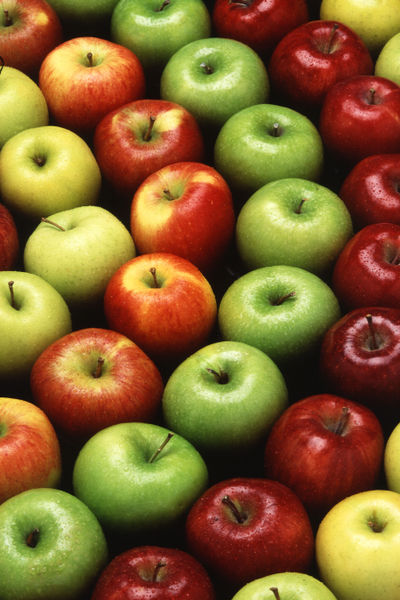
Nothing gives more, yet asks less in return, than a tree, particularly the apple,” said Jonathan Chapman. Better known as Johnny Appleseed, Chapman spent a half-century promoting the apple's many gifts. Besides providing flowers in the spring and shade in the summer, the tree gives us fruit in the fall. Countless dishes – from pies and cakes to sauces and butters – are made from apples. We can drink its juice and, if we age it a bit, tipple its hard cider.

The fruit is tasty and nutritious, full of fiber. It comes in a perfect package: attractive, long-lasting, and 100% biodegradable.

More than 2,000 apple varieties were once grown in the United States, offering a huge variety of flavors, as well as textures, colors, picking times, and durability. Apples names like Westfield, York imperial, black gilliflower, Baker, Newtown pippin, Stayman, and Esopus Spitzenburg were once commonplace. Today we’re lucky to find a half-dozen kinds in a supermarket and a dozen at an orchard.

However, “antiques” are still around and if you’re out for a ride in rural America, watch for an orchard carrying Dutchess of Oldenburg, opalescent, Ashmeads kernel, or even sheep’s nose. Buy a bag and taste Americas yesterday.

  The Jeremiah Bennett Clan: T he Days of the Desperados One morning in 1876, a Ridgefield man was sitting in a dining room of a Philadelphi...